



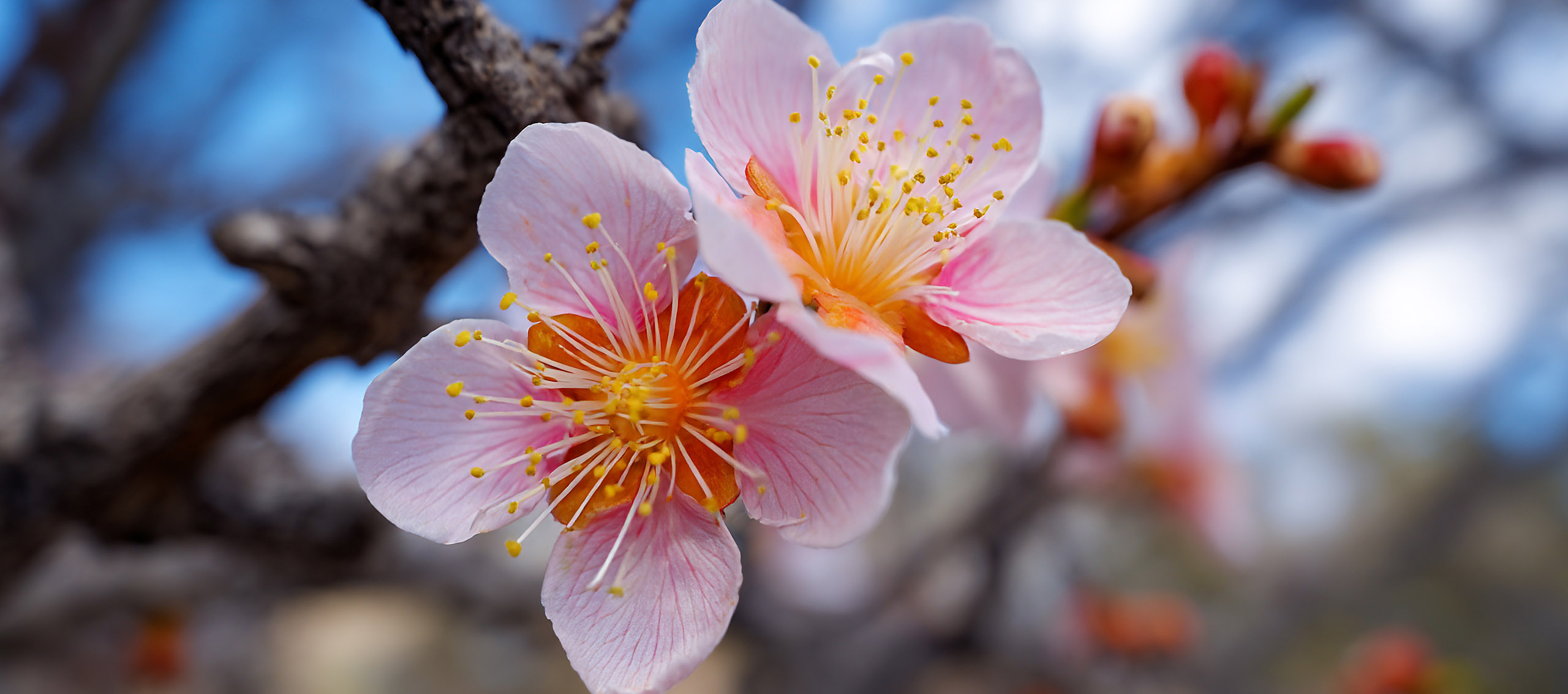
2026 has been a tough winter everywhere, and unusually cold here in North Central Florida. As of mid-February, I’ve logged over a dozen below-freezing nights in January and the entire first week of February. The forecast for the next ten days is mild, back in the 50s and 60s at night, so I’ve started some light, exploratory pruning.
What Endured Multiple Hard Freezes
I was impressed with some plants that went entirely uncovered and were completely unfazed by the cold. Pineapple Guava is always a great evergreen plant and looks the same as before the cold weather (the Strawberry Guava lost all its leaves, and the Lemon Guava’s leaves turned a beautiful burgundy). My tea garden took the cold weather like champs: Yerba Mate, Camelia Sinensis, and Yaupon Holly are all looking green and great. My Satsuma Orange gets morning shade, yet it still looks lush. Meiwa Kumquat, doing fine. My peaches, plums, and nectarines — of course — are happy to get the chill hours. My goji berry, blueberry, mulberry, and elderberry bushes are also evergreen and happy.
Prickly pear cactus always gets some dieback on the outer pads. They flop over, I pull them off, and they regrow pretty quickly. The Chomolia is still green.

One of my goji berry bushes above is unfazed and green, while the
Barbados Cherry bush nearby is toast after multiple nights in the twenties for several hours.
When You’re Zone-Pushing
I have a personal policy of babying my plants in their first year or two, but after that, they’re on their own. Any failures after year two, I chalk up to a high-maintenance plant that I wouldn’t have wanted anyway. That said, I do zone-push a few plants I really, reeeeally want.
Two of those would be my avocado trees. They were doing SO well through December. They were both lush and green. The Bacon Avocado tree is in year four and much taller than me, with a trunk at least six inches in diameter. Quite a few of its main branches are woody and strong. I wrapped the lower trunk and hoped for the best. What else could I do on windy nights in the low 20s?
I did cover my smaller Brogdon Avocado tree with a cage and blankets. It’s still small enough since I’ve lost a previous one at that location, and it’s only a couple of years old. Despite my efforts, both trees were covered in dry, shriveled leaves. The Bacon is alive so far, but will lose quite a bit of its more recent growth. I’m still not sure about the Brogdon, but I have hope. It was fully covered, but the hard freezes were unusually long, lasting days each time.
For Zone Hardy Plants
Here’s a practical, Florida-specific guide for what to do after an unusual freeze here in North Central Florida — especially for your garden, landscape plants, and lawn. Florida’s warm-season plants aren’t adapted to hard freezes, and the steps you take now can make a big difference in recovery.
1. Water, But Not Too Much
Why: Freezing can dry plants out and make soil moisture unavailable to roots. Watering helps thaw the soil, rehydrate stressed plants, and dilute salts that might burn roots.
How to do it well:
- Water soil thoroughly once temperatures are above freezing.
- Avoid overwatering — roots may be slow to function right after a freeze.
2. Don’t Prune or Clean Up Immediately
Why: Damaged leaves and stems can actually insulate the plant and protect remaining living tissue. Removing them too soon can expose vulnerable parts and slow recovery.
Best timing:
- Wait for new growth in spring to determine what’s alive.
- Light pruning to remove fully dead leaves can be okay, but avoid heavy cuts until you’re sure.
3. Hold Off on Fertilizing
Why: Fertilizer encourages new growth, and tender new shoots can be harmed if another cold snap happens or if the plant is still stressed.
Best practice:
- Wait until the risk of frost/freezes has passed, and plants show active new growth before feeding.
4. Be Patient — Damage May Appear Slowly
Plants often don’t show the full extent of freeze injury right away.
- Watch for delayed bud break, weak growth, or dieback over the next few weeks.
- Some plants may look dead above ground but still sprout from below.
- Give most plants 3–6 weeks to show what’s truly alive before making major cleanup decisions.

5. Special Considerations
Potted or Container Plants
- Containers lose heat faster, and roots can stay frozen longer. Water and monitor them closely once air temps rise. I bring mine into my heated greenhouse or into my house. They require extra watering because of the dry, heated air. If you’re not able to do that, move them to a sheltered spot (garage, porch, or even a south-facing wall).
Woody Trees & Shrubs
- Scratch test stems/bark: green under the bark = alive, brown/black = dead. Only prune back to live tissue after new growth begins.
Bottom Line for Hard Freezes
Recovery after a freeze isn’t instant. Water, be patient, delay pruning and fertilizing, and monitor plants over the coming weeks to make the smartest cleanup and care decisions. Most Florida landscapes can bounce back if you give them time and the right support.

How to Cover Plants for a Freeze (The Right Way)
Every year, I see people cover their plants in a way that will probably do more damage than good. I’ve seen black plastic bags covering just the top of the plant (eek!). Or some people throw a sheet over the top of the plant. Here is the best way to protect your plants from a freeze…
Cover to the Ground — Not Just the Top
The biggest mistake people make is wrapping the leaves like a hat.
Instead:
- Drape the cover all the way to the ground
- Trap the plant’s natural ground heat underneath
- Secure the edges with bricks, boards, soil, or landscape staples
Think of it like creating a tent, not a coat.
Why?
The soil releases stored heat overnight. If you don’t trap it, the cover won’t help much.

Use Breathable Fabric (Not Plastic Directly on Leaves)
Best materials:
- Frost cloth (row cover)
- Old sheets
- Blankets
- Burlap
- Drop cloths
Avoid:
- Plastic touching leaves (it conducts cold and can cause burn)
- Tarps directly on foliage
If you must use plastic:
- Use stakes or a frame to keep it off the plant
- Put fabric under the plastic layer
Cover Before Sunset
Put covers on before temperatures drop below 40°F.
Why?
- You trap the day’s stored warmth.
- Once the plant is already freezing, covering helps less.
Add Extra Protection for Sensitive Plants
For citrus, tropicals, or young trees:
- Add multiple layers
- Wrap the trunk (especially grafted citrus)
- Place a bucket or box over small plants
- Use large cardboard boxes for single shrubs
For very valuable plants:
- Old-school Christmas lights (incandescent only, not LED) under the cover can add a few degrees of warmth.
Water the Soil Earlier in the Day
Moist soil holds more heat than dry soil.
- Water the ground the afternoon before the freeze.
- Don’t water late at night — you don’t want ice forming on foliage.
Remove Covers in the Morning
Once temps rise above freezing:
- Remove covers to prevent overheating
- Especially important on sunny Florida mornings
Plants can cook quickly under heavy fabric once the sun hits.
North Central Florida Freeze Reality
Typical freeze types here:
- Radiational freeze (most common): calm, clear night → covering works very well.
- Advective freeze (windy Arctic blast): covering helps less, but still protects some.
If the wind is strong, secure covers tightly.
Special Situations
Vegetables
- Row cover directly over hoops works best.
- Double layer for temps below 28°F.
Citrus
- Protect the graft union.
- Young trees are most vulnerable.
- Mound soil around the trunk base for extra insurance.

Container Plants
- Move against a south-facing wall.
- Group together.
- Wrap pots (roots freeze faster than tops).

Temperature Guide
- 32–30°F: Most tropicals need protection
- 28–25°F: Citrus, avocados, and many shrubs at risk
- 24°F and below: Serious damage likely without strong protection
Copyright © 2026 Fruitful Food Forestry & Lauren Lynch. No portion of the original content on this website may be reproduced, in any language, without express written consent.
Gardeners just wanna have fun.
We’ve got you covered…



Leave a Reply
Your email is safe with us.